
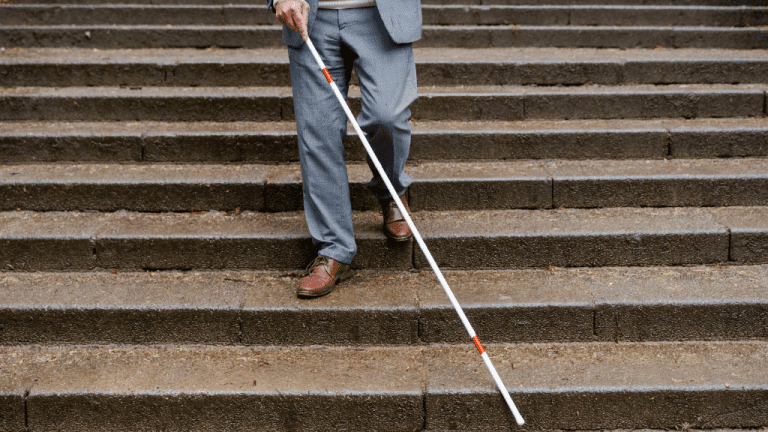
The white cane is a long aluminum stick that is universally recognized and accepted as a symbol of blindness as well as a means of mobility for people who are blind. Beyond that, it is a tool of independent living for the blind and partially sighted persons.
It was invented by James Biggs of Bristol in 1921 and has significantly transformed the standard of living of people who are blind around the world. The Nigeria Association of the blind (NAB), the umbrella organization of the blind and partially sighted people, is delighted to join its counterparts worldwide to commemorate today.
The social, political, and economic atmosphere in Nigeria has been quite gloomy as well as inaccessible to the blind. The untoward behaviors meted out by some Nigerians to the blind are heartbreaking and disheartening. The blind are generally seen as those who should be pitied and are completely dependent on others.
Also, the physical environment is hostile, unfriendly, and the white cane is incompatible. Roads and public buildings are not white cane compliant. For example, there are no sidewalks, no textured paving, and in most cases, the drainage is widely open. Importantly, too, Nigeria is yet to enact a white cane legislation to grant people who are blind the right of way. These and many other negative practices have made the country unsafe for white cane users.
Despite this plethora of daunting challenges, NAB and its members have recorded gigantic milestones in many areas. For instance, many of our members have distinguished themselves in various spheres of human endeavors. In fact, NAB has demystified blindness and changed the narrative of what it means to be blind.
Thanks to our wonderful companion, Mr. White cane.
The theme, promoting independence and productivity, is obviously apt and necessary, especially given the current outbreak of the global pandemic.
For the independence of people who are blind and partially sighted to be fully guaranteed, government and critical stakeholders must put hands on deck to make the country inclusive and accessible.
Also, the myths and misconceptions about the white cane and people who are blind should be discarded.
People who are blind are excellently endowed, and their potential should be harnessed in order to make the country great economically and inclusive.
NAB is yearning for partnership with donor agencies, public-spirited individuals, and the government to better the lives of Nigerians with visual impairment.
You can donate white canes to us as your contribution to mark the day.
Happy 2020 International White Cane and Safety Day.